Patterns / Group 3

3 Working Within the System

These patterns are the cheapest levers: ways of making room for change while the money flows stay exactly as they are. They come from Chapter 15, “Working Within the System”, where Jan finds out who really decides on her platform’s funding, what that person is measured on, when the budget window opens, and who might back her.

None of them changes the system. They work by fitting a proposal to the system as it is: the right decider, the right targets, the right moment, the right budget, and allies who have money of their own. They are also the patterns a reader can start using on their own, without a sponsor or a workshop.

Working within the system has a ceiling. Some changes can’t happen until the way the work appears in the money flows changes (the next group), or the money flows themselves change (the group after that).
Pattern 3.1

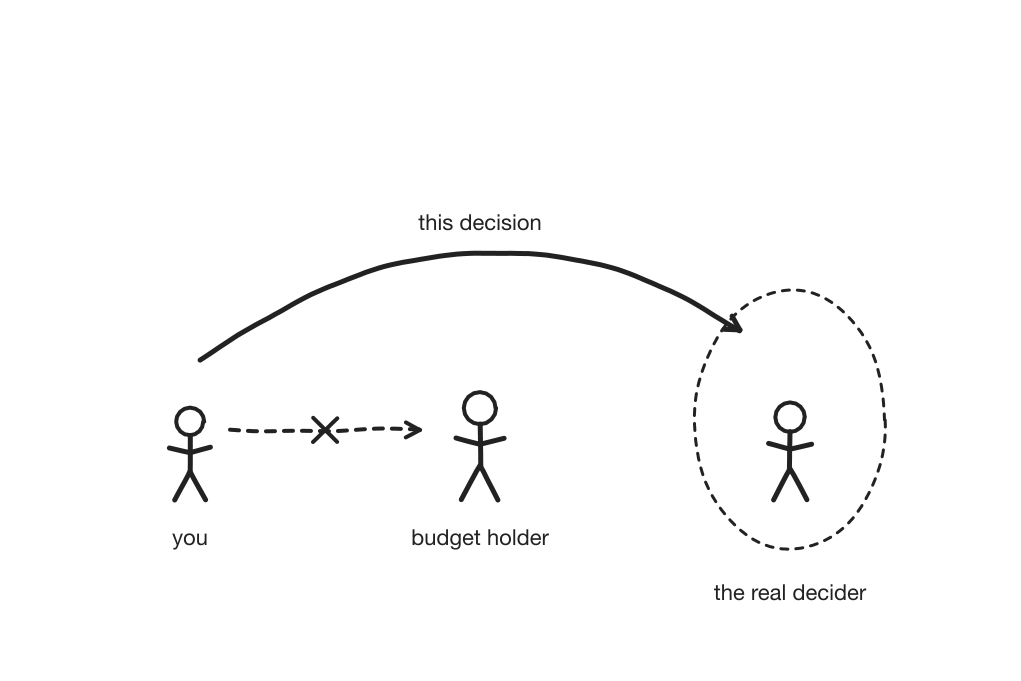
Find the Real Decider

For the specific decision your change depends on, find out who really decides, rather than pitching to the person who controls your budget.

Pattern 3.2

Learn What They’re Measured On

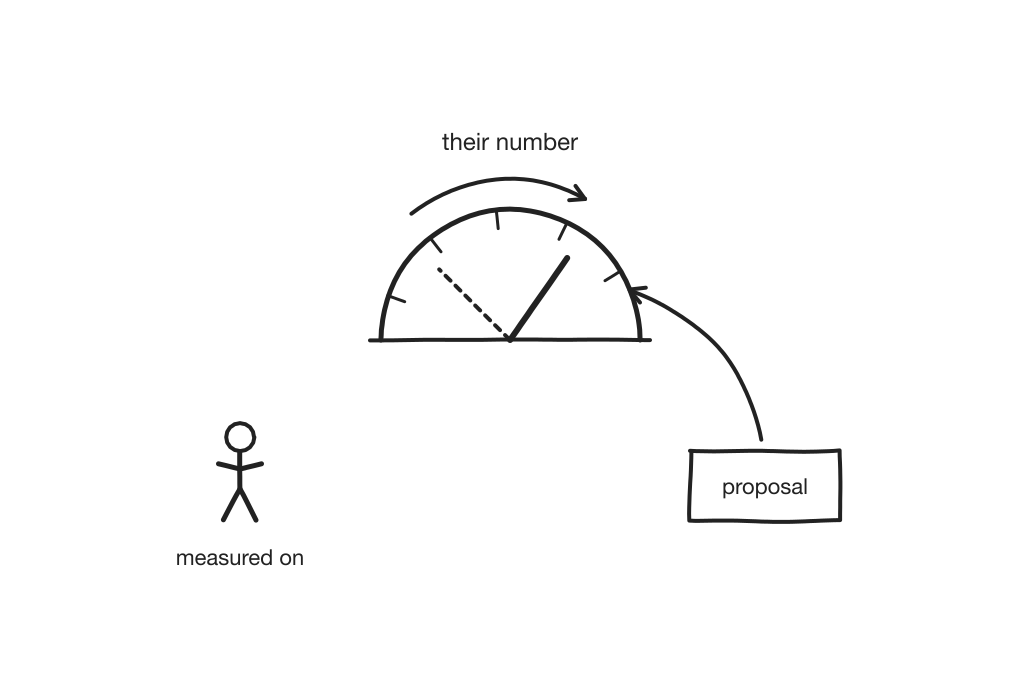
Find out what the people you need are actually rewarded and punished for, and show how your proposal moves a number they are already accountable for.

Pattern 3.3

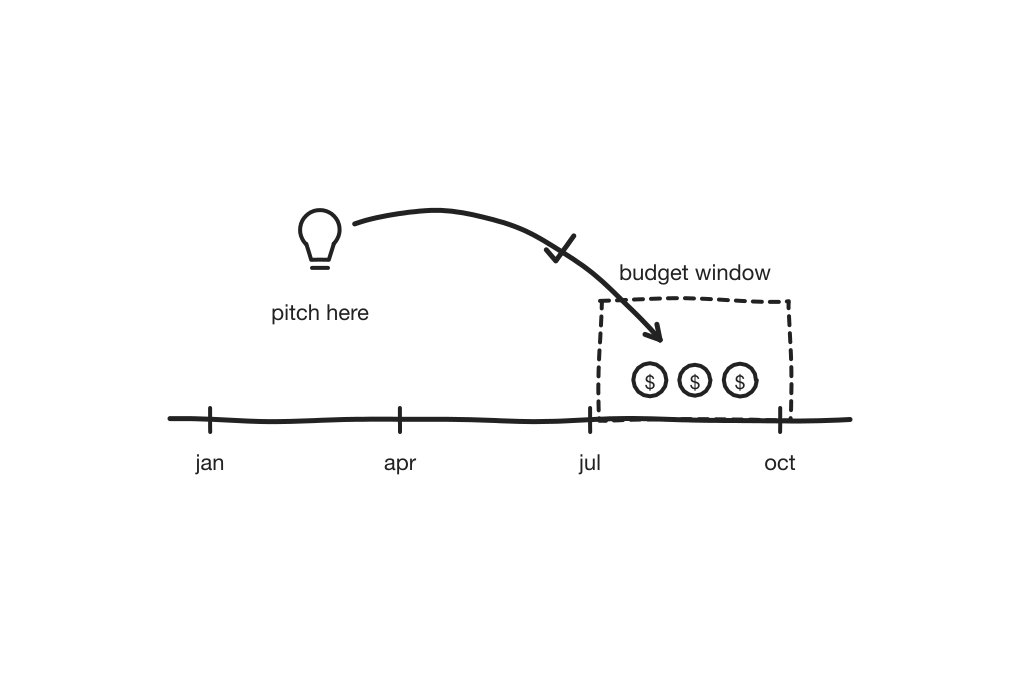
Pitch in the Budget Window

Ask for money when the money is being decided, not when you happen to be ready.

Pattern 3.4

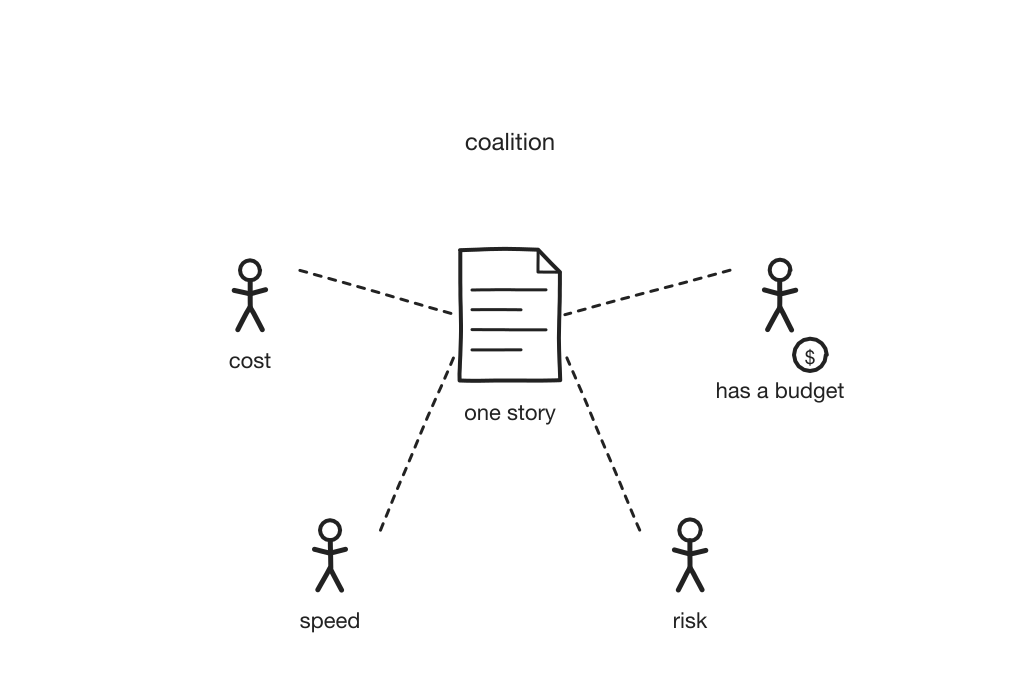
Coalition With Money

Bring together several people who want your change for different reasons, held together by one story that each of them can retell, and include at least one early adopter who has money of their own.

Pattern 3.5

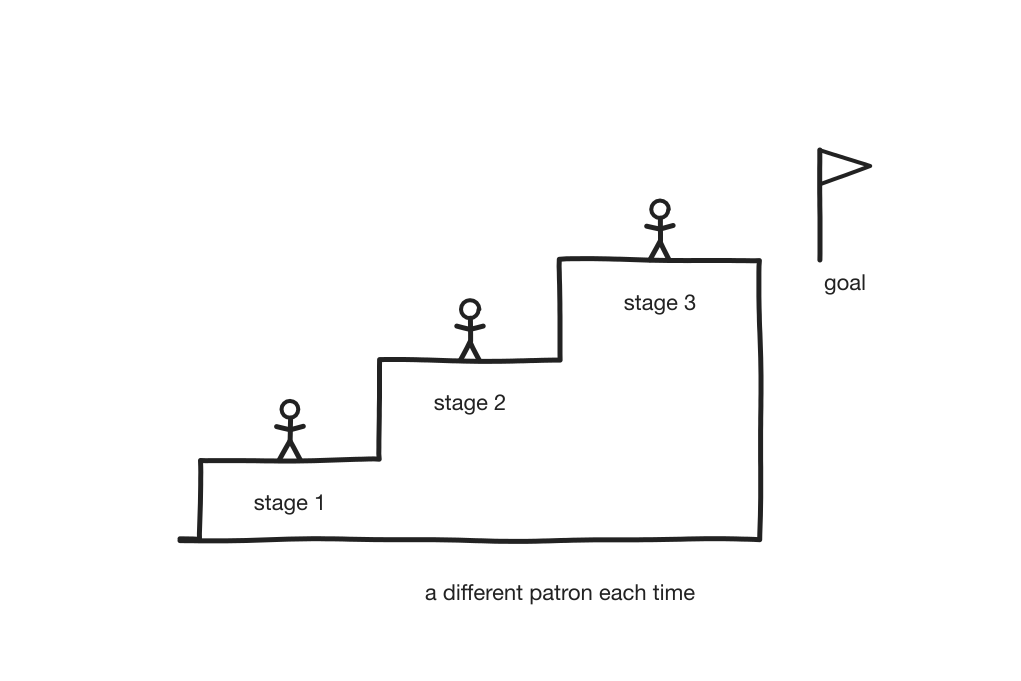
Staged Build

Instead of one big pitch, build in stages, choosing each stage to serve the goal that one of your patrons has at the time.

Pattern 3.6

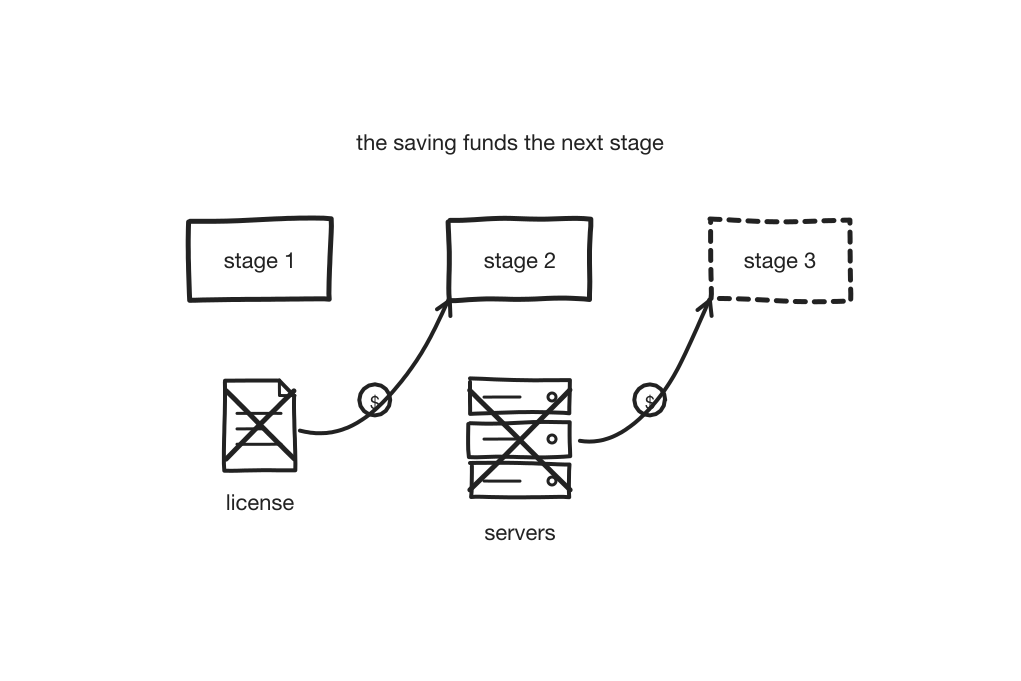
Make Each Stage Pay for the Next

If the first stage of your change retires a license, a contract, or a server estate, offer that saving to fund the second.

Pattern 3.7

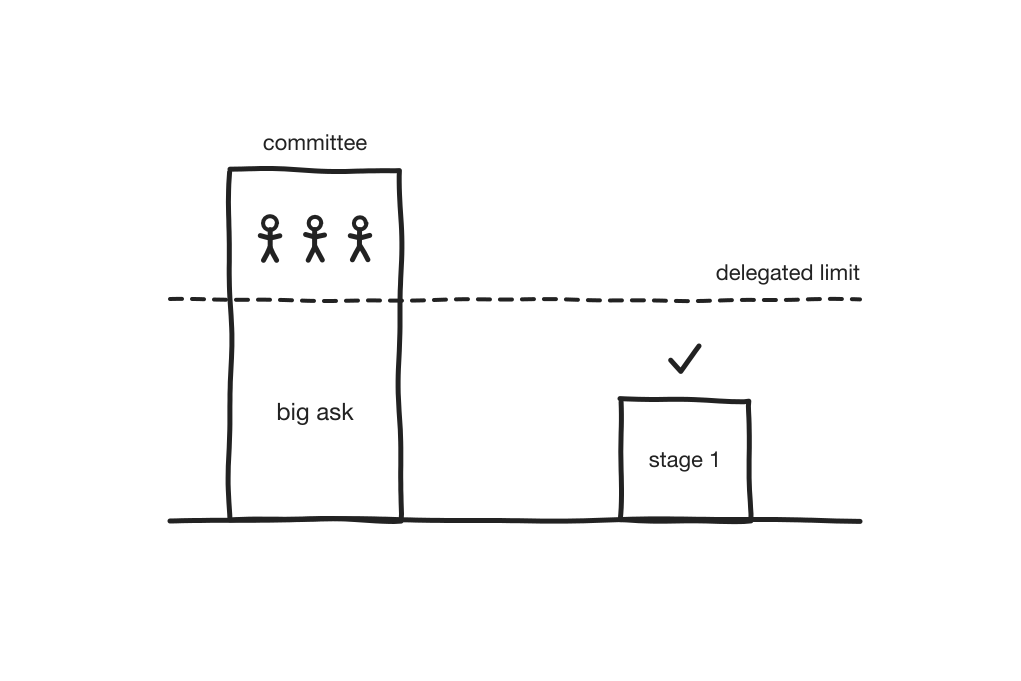
Fit Under the Threshold

Size the first stage of your change to fit inside someone’s delegated spending authority, so that it needs no business case and no committee.

Pattern 3.8

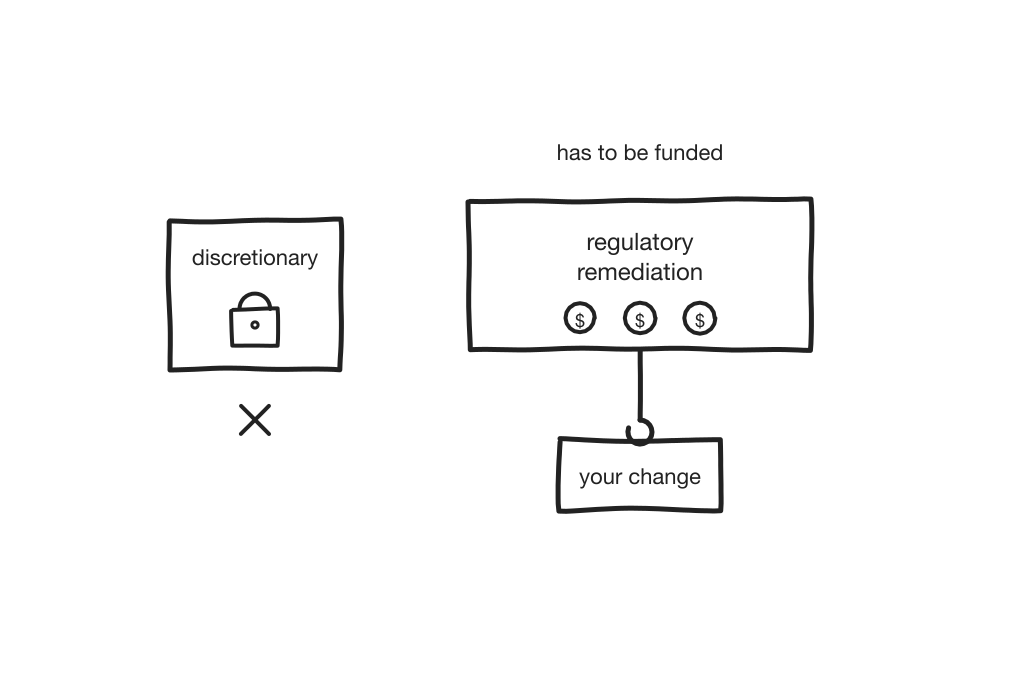
Attach to Mandatory Money

When discretionary budgets are closed, attach your change to a program that has to be funded anyway, such as regulatory or security remediation.

Pattern 3.9

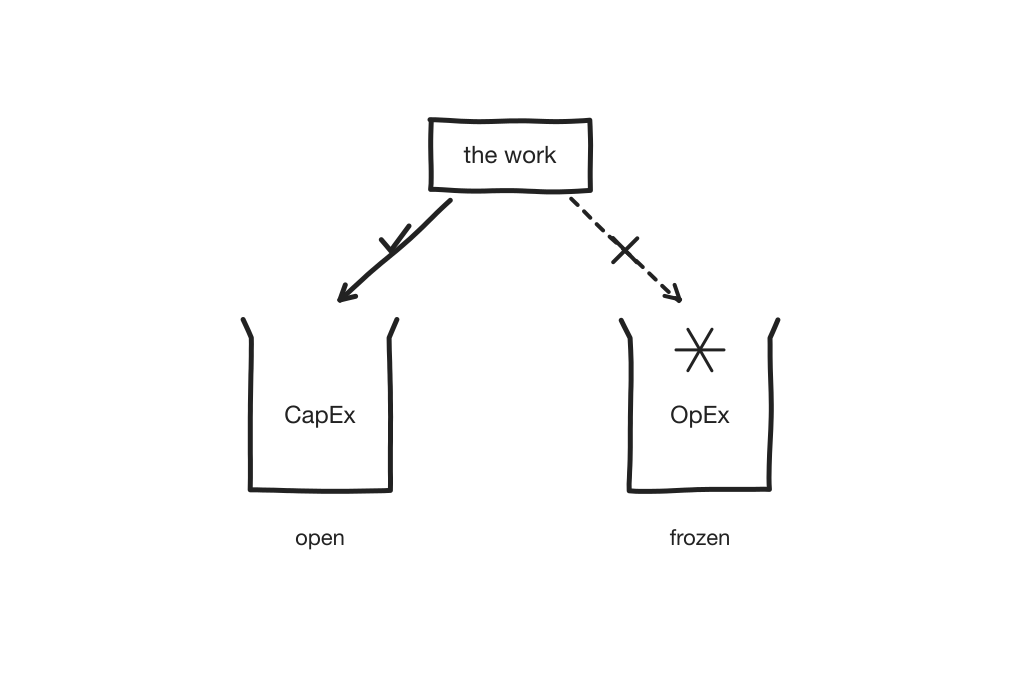
Which Budget, Not Whether

When one pot of money is frozen, ask whether your work can be paid for, or treated, as the other kind: capital instead of operating spend, or the reverse.

Pattern 3.10

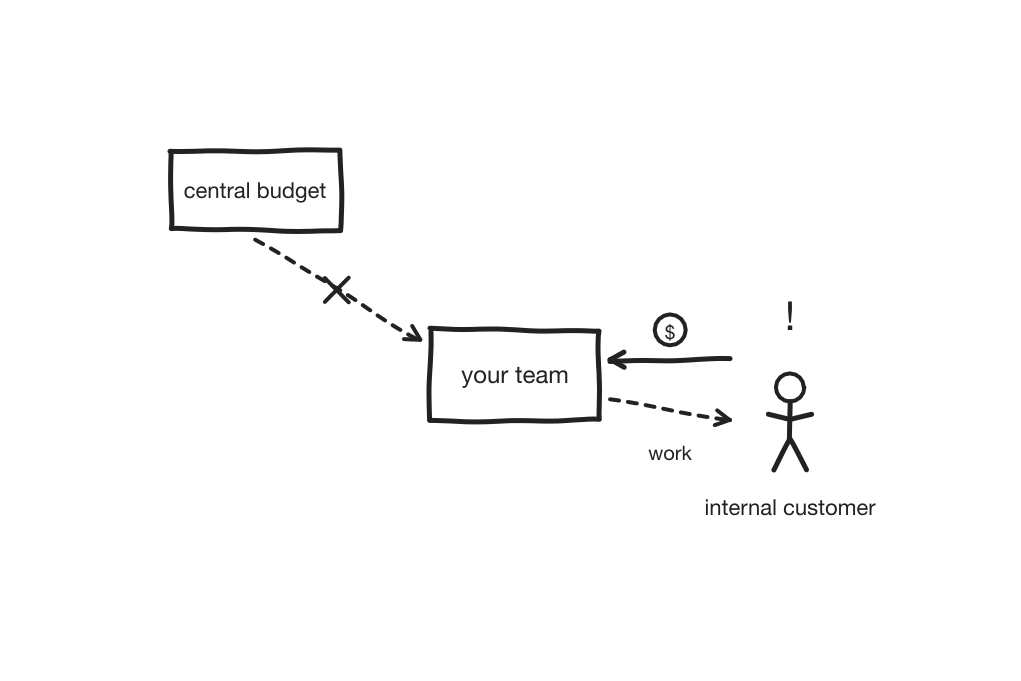
Let a Customer Pay

When the central budget won’t fund your work, find an internal customer with a pressing need who is willing to pay for it from their own budget.

Pattern 3.11

Second Sponsor

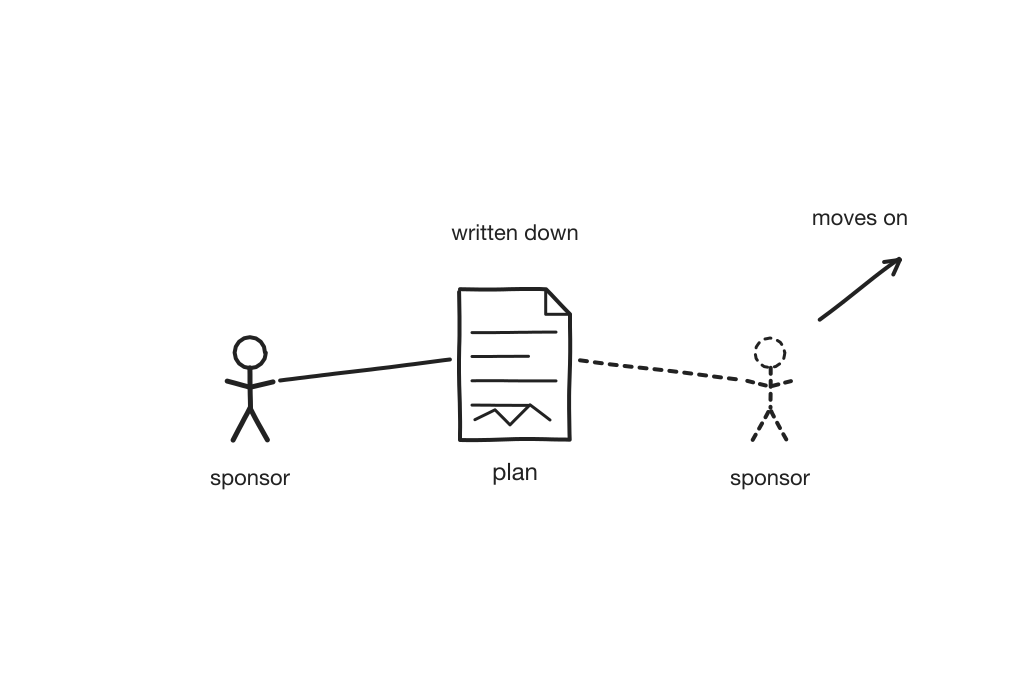
Have more than one sponsor, and get their commitments written into plans that will outlive any one of them.

Pattern 3.12

Below the Radar, Then Visible

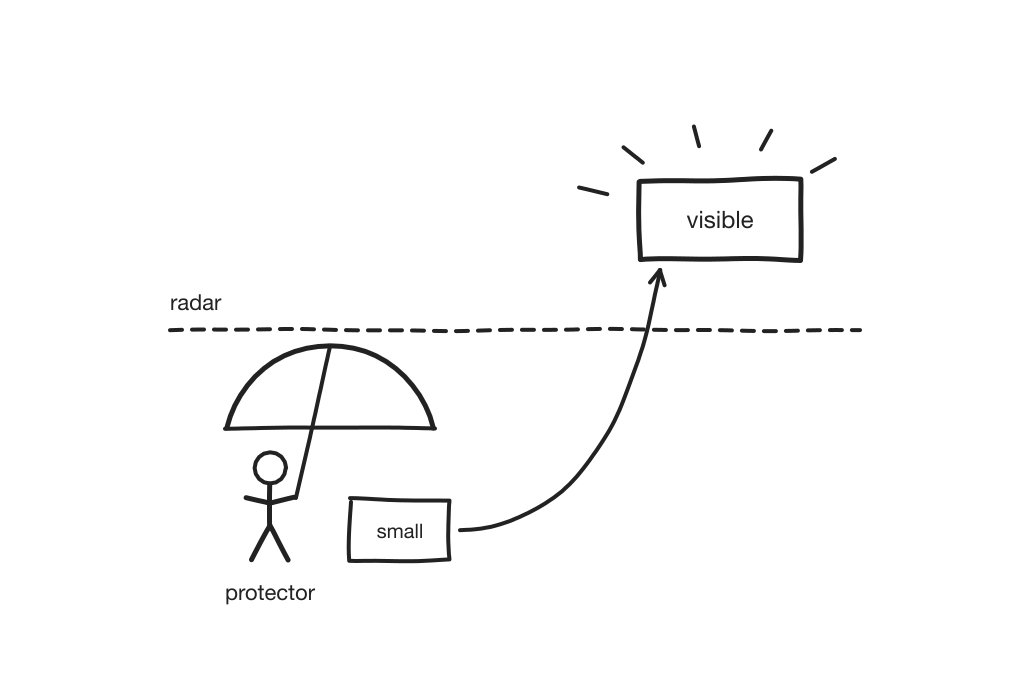
Keep small, cheap work out of sight with a senior protector until it has proved itself, then make it visible on purpose once it needs funding or adoption beyond the team.

Pattern 3.13

Use the Formal Process

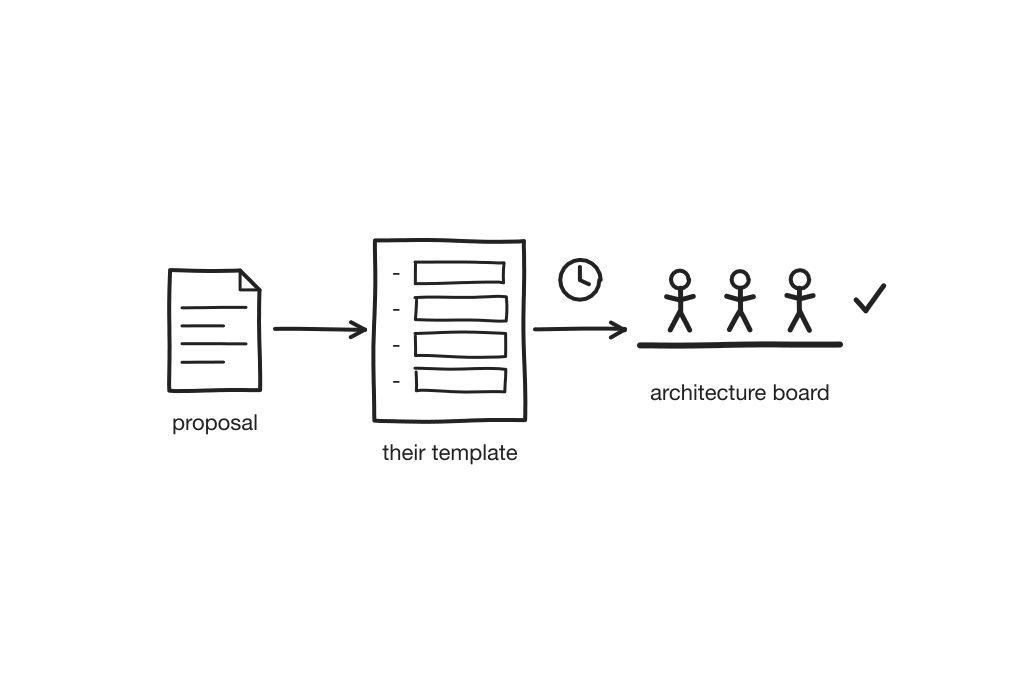
Submit your proposal through the organization’s own architecture boards, investment committees, and business case templates, in the format they expect, even when the process is slow.