Patterns / 3. Working Within the System
Pattern 3.2
Learn What They’re Measured On
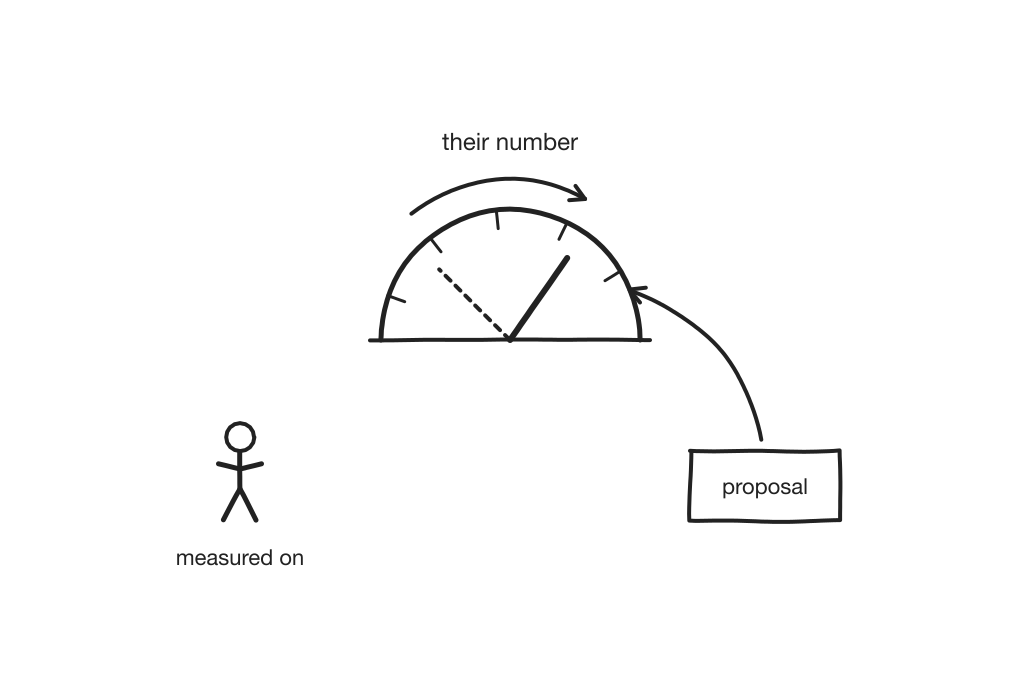
Find out what the people you need are actually rewarded and punished for, and show how your proposal moves a number they are already accountable for.
In This Context
Everyone in an organization has patrons of their own, and their incentives come from those patrons. A proposal that asks people to adopt your goal competes with everything they are already paid to do, and usually loses. Organizations also measure on several levels at once: stated measures in the strategy deck, rewarded measures in bonus letters, and enforced measures that get someone called into a meeting. Where these differ, the enforced ones win. Beyond the formal measures sit informal incentives such as power and scope, visibility, career, and an easier life.
You can see this pattern is needed when your metrics and the budget holder’s have nothing joining them, and your work looks like all cost and no benefit on their measures.
- People will rarely tell you their whole set of targets.
- Published documents can be polite fictions, and gossip can be untrue.
- A change that cuts someone’s costs may also shrink their empire.
Therefore
Find the patron behind the person, then align your proposal to what they are measured on.
- Use published objectives, the KPIs on the slides they present upward, budget review agendas, what their boss is under pressure about, and gossip, and check each against the others.
- Distinguish stated, rewarded, and enforced measures.
- Restate your proposal as movement on their number (for example, retiring duplicate tooling for a lead with a cost reduction target).
- If your patrons have a pet framework or initiative, find the name your work goes by in its vocabulary.
- Remember the informal incentives: let an ally present the result upward, or offer something in exchange for lost scope.
Consequently
- People help because it helps them, so the support lasts.
- Your work starts to count on measures that already exist, rather than on new ones you have to argue for.
- Each source of information is unreliable on its own, and misreading someone’s interests can come back to bite you.
- If you find yourself trying to get someone to act against their own interests, you have probably misread the situation.
Seen In
Chapter 15, “Aligning Your Proposal”, Chapter 15, figure “Jan’s platform metrics and Zack’s, with nothing joining them”; Chapter 15, “Beyond the Bonus”, Chapter 15, “Work Toward What Gets Measured”; Jill at the board in Chapter 6, “Year Five, Continued: CollabKo”; the ITIL renaming in Chapter 13, sidebar “War Story: Speaking the Patron’s Language”.