Patterns / 3. Working Within the System
Pattern 3.3
Pitch in the Budget Window
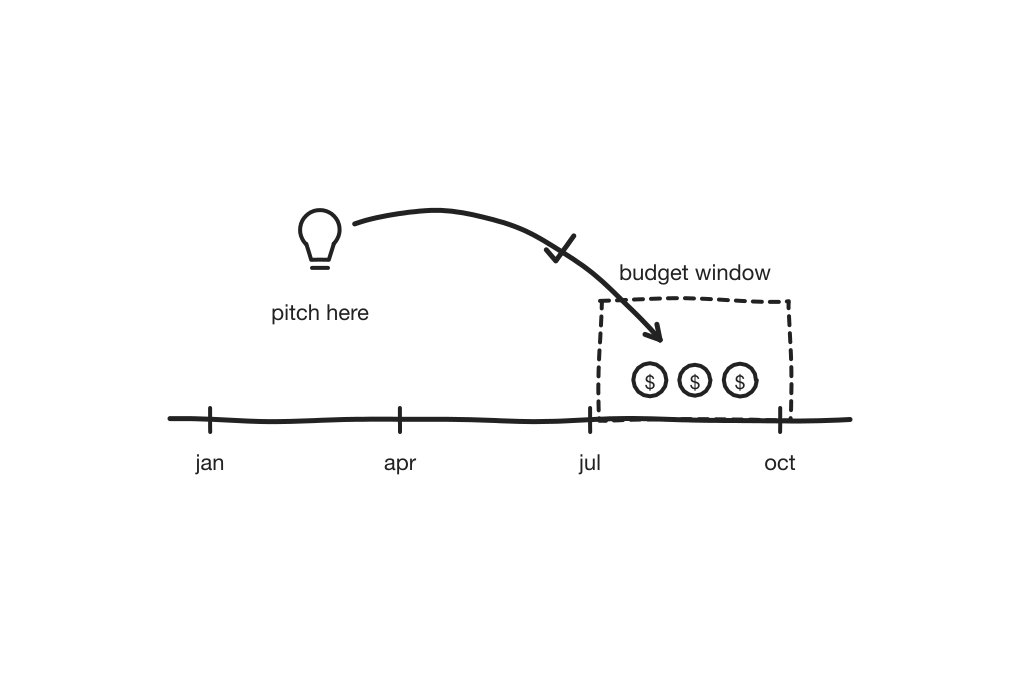
Ask for money when the money is being decided, not when you happen to be ready.
In This Context
Budgets are set once a year. By the time the budget meetings happen, most of the arguments have already been had, in spreadsheets prepared months earlier, usually in finance, between people you may never have met. A good proposal that arrives just after the round has closed creates more problems for the budget holder than it solves, so it is praised and parked until next year, by which time the problem, the sponsor, or the proposer may have moved on.
You can see this pattern is needed when proposals are welcomed and then parked “until next year,” and the same items reappear every year.
- Once a budget is set, nobody wants to reopen it.
- The real decisions are made in the preparation, not the meeting.
- Reporting cycles (monthly boards, quarterly earnings calls) set their own smaller windows.
Therefore
Find out when the next budget round opens, who prepares the numbers, and what format they want, and have the proposal ready and pre-socialized before then.
- Get the proposal into finance’s draft numbers before the round, not into the meeting itself.
- Give the people in charge something good to say at their next board meeting or earnings call.
- If the window has closed, use the routes that remain, each with its own strings: discretionary or contingency budgets, innovation funds, year-end underspend, and reforecasts.
- Watch for other windows that reopen decisions: incidents, audit findings, regulatory deadlines, and a new leader’s first months.
Consequently
- The proposal competes on equal terms with everything else being funded.
- It reaches the people who prepare the numbers, who often have more influence than the people who sign off on them.
- You are now in the same contest as everyone else, and your case has to survive being compared with theirs.
- You have to plan months ahead, and a good idea that misses the window still waits a year.
Seen In
Budget cycles in Chapter 1, “Budget Cycles”; Chapter 15, “Timing: Exploiting the Budget Cycle,” and the war story “Budgeting Every Three Months” (Chapter 15, “Timing: Exploiting the Budget Cycle”, Chapter 15, sidebar “War Story: Budgeting Every Three Months”); the case going into finance’s draft numbers in Chapter 16’s conclusion.