Patterns / 4. Reframing the Conversation
Pattern 4.1
The Deletable Cost Line
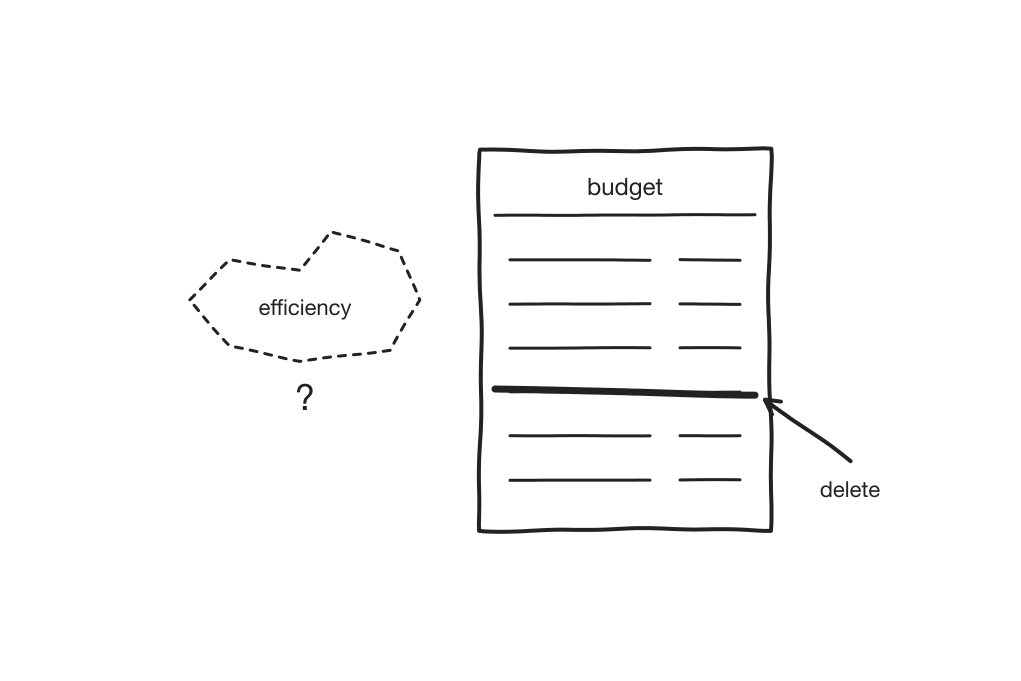
A saving is only a saving if a budget holder can delete a line, so build your case on cost lines that can be removed.
In This Context
Engineers argue for platforms and tooling on reuse and speed. But a saving that appears on nobody’s P&L is not a saving to anyone who holds a budget. Freed-up capacity doesn’t show: the same engineers are paid the same salaries and go on to do other work. Faster delivery may even raise costs, because the business takes on more work, and to someone questioning every cost line that grew last year the platform can look like it made things more expensive.
You can see this pattern is needed when finance’s response to your case is “but what does it save?”, or worse, a question about why your own cost line grew.
- Reuse and speed are true benefits, but invisible ones.
- Finance accepts savings it can check.
- Capital spend at the front of a case reads as one more group asking for money.
Therefore
Build the case on cost lines that can be deleted, owned by people who are measured on reducing them.
- Lead with a canceled license, a terminated SaaS contract, or duplicated licensed tools being switched off.
- Restate “it’s better engineering” as “it reduces a cost you’re already being pushed to lower,” and “teams will reuse it” as “these three budgets each pay for the same thing today.”
- Keep the build cost small, and lead with the operating cost lines that fall.
- Use speed only where someone owns the revenue that arrives sooner.
Consequently
- Finance can check the saving, so it survives the next year.
- The case lands on the targets of people who are already being pushed to cut costs.
- The case is smaller than the full value of the work, and the rest of the value stays invisible.
Seen In
Chapter 16, “Win the Right Arguments” and “Make the Numbers Survive Being Checked”; Chapter 1, “Invisible Profit and Loss Benefits”; Neil’s advice in Chapter 16, “Which Budget, and Which Kind of Money?”.