Patterns / 3. Working Within the System
Pattern 3.13
Use the Formal Process
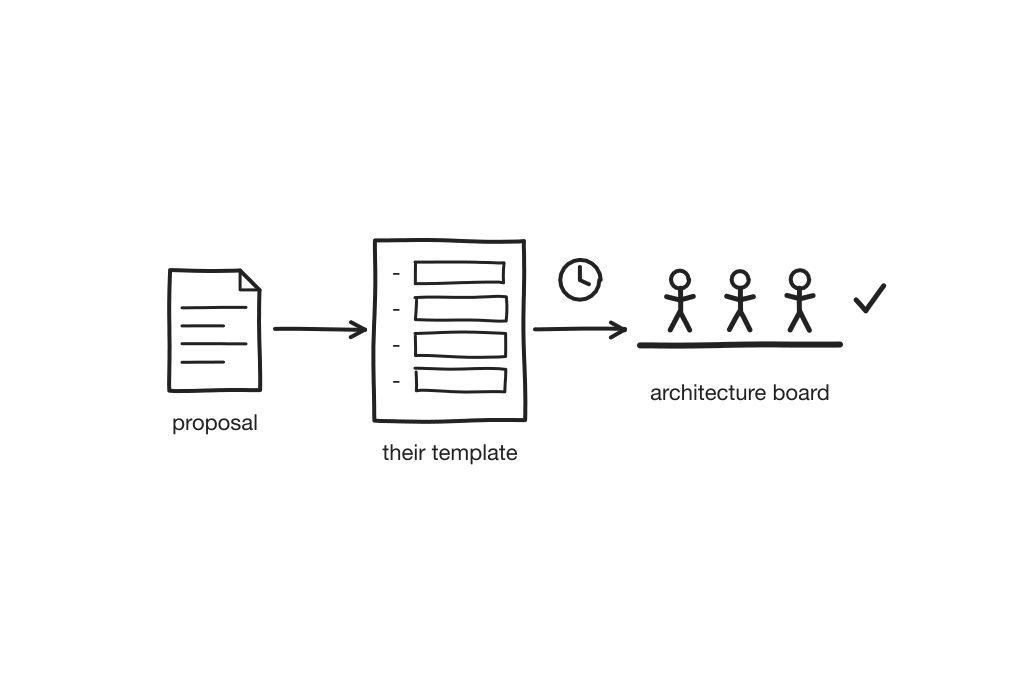
Submit your proposal through the organization’s own architecture boards, investment committees, and business case templates, in the format they expect, even when the process is slow.
In This Context
Engineers often try to route around formal processes, because they are slow and seem built to say no. But architecture boards, investment committees, and business case templates are part of the system too. A proposal that arrives informally, or in the wrong shape, is easy to set aside. The format of a template, and the questions a committee or controller always asks, also say what the organization actually measures, which is often more reliable than its strategy deck.
You can see this pattern is needed when your proposal keeps being sent back with questions you thought were irrelevant.
- Formal processes are slow.
- They define what an approvable case looks like.
- They reveal what is really being measured.
Therefore
Use the process, and read it for what it tells you.
- Get the template, and the format the budget round expects, from someone in finance.
- Write the proposal in that format.
- Treat the template’s questions as a list of what the committee measures, and answer them in its terms.
Consequently
- The proposal is easier to approve, because it arrives in the shape the committee expects.
- You learn what the organization measures.
- It is slow, and puts the proposal on the process’s timetable rather than yours.
Seen In
Chapter 15, “Other Ways to Find Room” (“Use the formal process, even when it’s slow”); Chapter 16, “Work With Finance” (“Let finance tell you what’s being measured”).