Patterns / 3. Working Within the System
Pattern 3.5
Staged Build
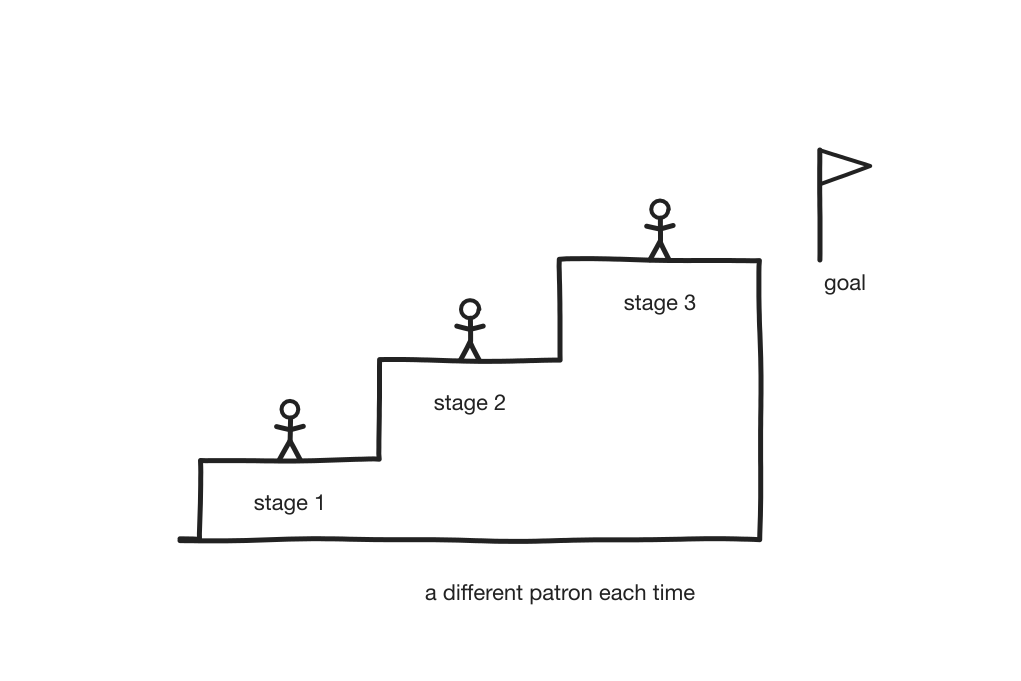
Instead of one big pitch, build in stages, choosing each stage to serve the goal that one of your patrons has at the time.
In This Context
Engineers often build first and expect the business to see the value and invest. A large platform pitched as a whole needs a large case that nobody can approve on their own, and is easy to see as one more cost. Business goals also change from quarter to quarter: profitability one quarter, a story for the market the next. A single plan written against last year’s goal will miss this year’s.
You can see this pattern is needed when your proposal is “the whole platform,” and you can’t say which part of it serves which person’s goal.
- What you build has to be tied to business goals, which keep changing.
- Each stage needs a patron who benefits from it.
- You need to know who decides, what they are measured on, and when the window opens before you can plan the stages.
Therefore
Break the work into stages, each tied to someone else’s goal, and re-point the work as goals change.
- Write down the first stage you would build, and the goal it serves for someone other than you.
- Order the stages by whose goal each one serves now (for Jan: a business unit CIO’s blocked feature first, then the consolidation that shows a cost line falling for the group CIO).
- Make the case for one stage at a time.
Consequently
- Each stage has a patron, so each one is easier to approve.
- The work can serve several business goals in turn, as the bench project did (financial, sales, marketing, and upskilling).
- It may mean building more slowly than you would like.
- The plan has to be revisited as goals change, which means the work you want most may never be the stage that gets funded next.
Seen In
Chapter 15, figure “Staging Jan’s platform against her patrons’ goals”; Chapter 15, “Don’t Just Build: Tie the Work to the Business Goals”; Chapter 15, sidebar “War Story: The Bench Project That Became an Asset”; the one-stage case in Chapter 16’s conclusion.