Patterns / 3. Working Within the System
Pattern 3.6
Make Each Stage Pay for the Next
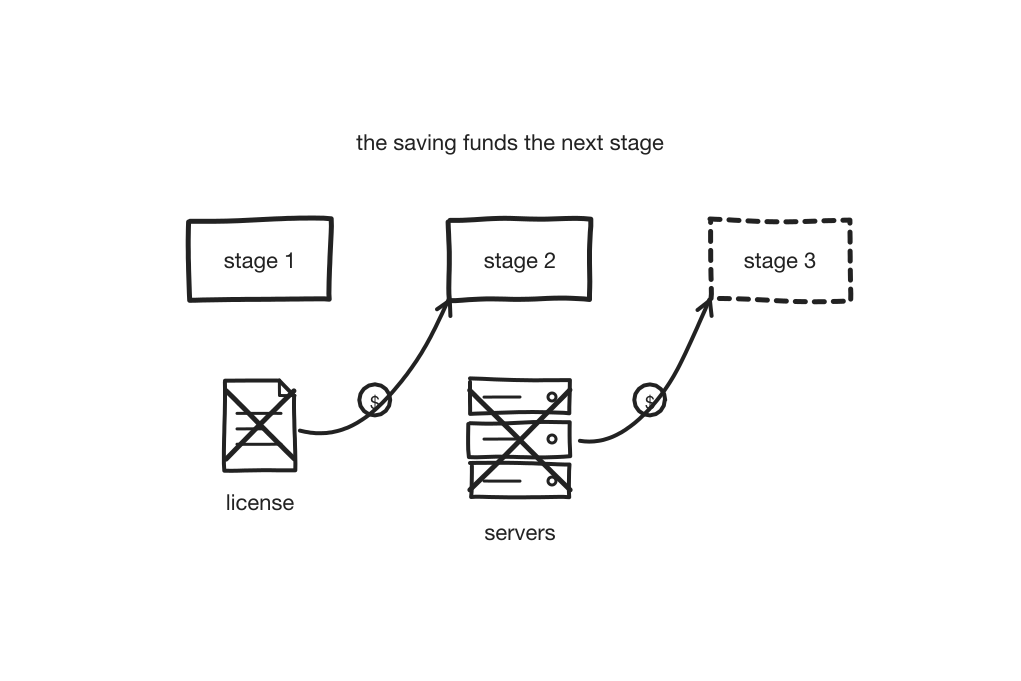
If the first stage of your change retires a license, a contract, or a server estate, offer that saving to fund the second.
In This Context
A large change usually needs funding in stages, and each stage has to win its own approval. A stage that only costs money competes with everything else in the budget. A stage that also removes a cost changes the conversation: the next stage can be paid for with money the organization would otherwise have spent anyway, and the saving lands on the target of whoever is pushing for efficiency.
You can see the opportunity for this pattern when the early stages of your plan switch off something with a bill attached.
- A change that funds itself is much easier to approve.
- Savings are easier to forecast than to evidence.
Therefore
Order the stages so that the earliest ones remove a cost line, and propose that the saving funds what comes next.
- Name the license, contract, or estate that the first stage retires.
- Agree the baseline and the date the saving lands with finance, so the next stage isn’t funded by a saving nobody can find.
Consequently
- Later stages need less new money, and each stage brings evidence for the next.
- The saving can land directly on a senior decision-maker’s efficiency target.
- If the saving doesn’t materialize on time, or can’t be evidenced, the next stage is left unfunded.
Seen In
Chapter 15, “Other Ways to Find Room” (“Make each stage pay for the next”); the risk side from Chapter 16, “Make the Numbers Survive Being Checked” (the Technology Modernization Fund).