Patterns / 3. Working Within the System
Pattern 3.8
Attach to Mandatory Money
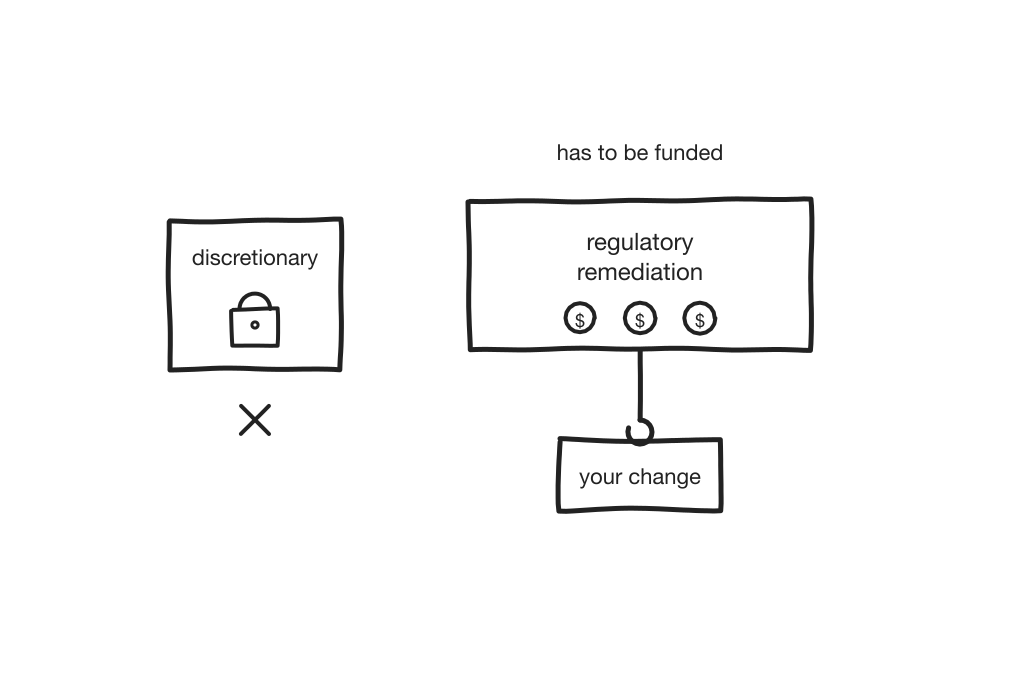
When discretionary budgets are closed, attach your change to a program that has to be funded anyway, such as regulatory or security remediation.
In This Context
Discretionary money is set once a year, and what’s left of it outside the budget round is small and usually spoken for. Some work, though, is not discretionary. Regulatory deadlines, audit findings, and security remediation have to be done, often already have money behind them, and reopen decisions that have been closed. A change that would never be funded on its own technical merits may close a security finding (or “audit point”) that somebody is measured on.
You can see this pattern when your proposal is parked for lack of budget, while open findings or deadlines it would help with are owned by someone else.
- Discretionary and contingency budgets are small, and usually already allocated.
- Audit findings, regulatory deadlines, and incidents reopen decisions outside the budget window.
- Someone, such as a head of security or risk, is measured on closing those findings.
Therefore
Look for the mandatory programs your change would contribute to, and make the case to whoever owns them, in their terms.
- List the open audit findings, regulatory deadlines, and remediation programs your change touches.
- Show which findings it closes (for a platform, one patched base container image instead of forty).
- Recruit the owner of those findings as an ally, since their measure moves too.
Consequently
- The work is funded from a budget that has already been approved, without waiting for the next round.
- The program’s owner becomes an ally with a number of their own to move.
- As with every route outside the budget window, the money comes with its own strings, such as the program’s deadline and its definition of done.
Seen In
The platform funded from a security remediation budget in Chapter 15, sidebar “War Story: The Security Finding as a Trojan Horse”; Chapter 15, “Other Ways to Find Room” (“Windows other than the budget cycle”); the security example in Chapter 15, “Aligning Your Proposal”.