Patterns / 3. Working Within the System
Pattern 3.9
Which Budget, Not Whether
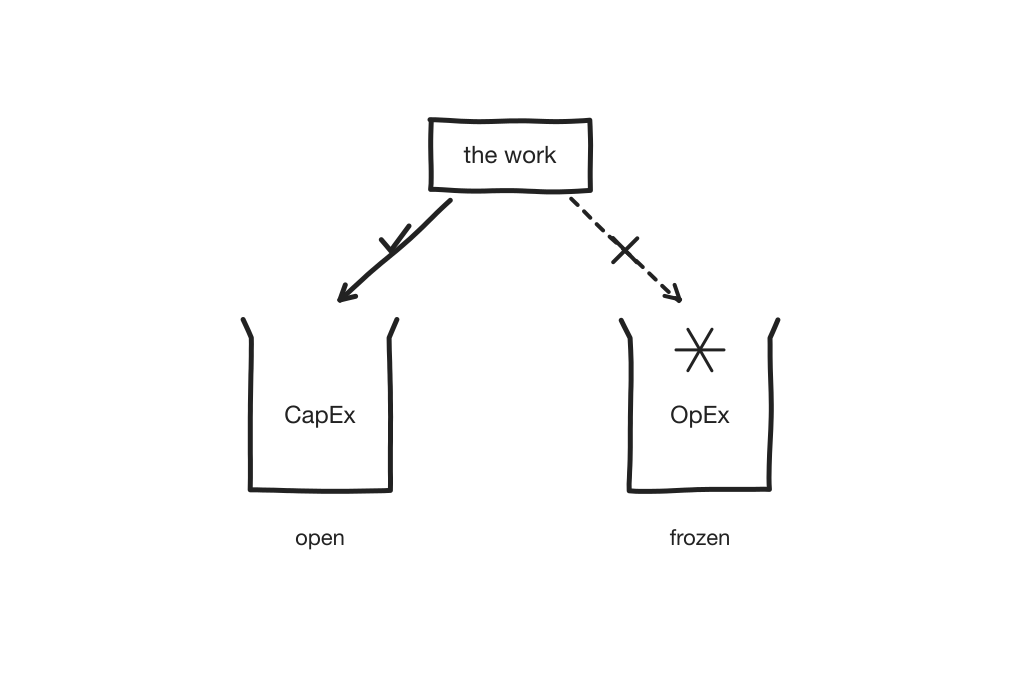
When one pot of money is frozen, ask whether your work can be paid for, or treated, as the other kind: capital instead of operating spend, or the reverse.
In This Context
Capital and operating budgets are usually separate pots, with different owners and different rules. The same work can often be treated either way, and which treatment the people you need prefer depends on what they are watching this year. A business short of cash cares where the money goes whichever way it is accounted for. A business owned by private equity often watches EBITDA, so moving cost onto the balance sheet looks attractive. A public company often watches operating margin and the next earnings call. A group whose capital budget is spoken for may prefer anything paid from operating budgets.
You can see the opportunity for this pattern when the answer to your proposal is “there’s no money,” but only one kind of money has been asked about.
- Accounting treatment changes which number the work affects.
- Preferences change from year to year.
Therefore
Ask how your costs would be treated, and which treatment your budget holders prefer this year, and frame the case to suit.
- Ask someone in finance how the work would be accounted for.
- Find out what the budget holder is watching (cash, EBITDA, operating margin, or growth in operating cost lines).
- Lead the case with the kind of cost that helps that number, and keep the other kind small.
Consequently
- Work can find funding when one pot is frozen.
- The right treatment can improve the number the owner is measured on, as capitalizing the bench project improved EBITDA without any new cash revenue.
- The preference is specific to the organization and the year, so the same framing may not work next year.
- Capitalized work can later be “done” in the accounts while it is still alive in engineering.
Seen In
Chapter 15, sidebar “War Story: The Bench Project That Became an Asset”, Chapter 6, sidebar “CapEx Versus OpEx”; Chapter 15, “Other Ways to Find Room” (“Which budget, not whether”); Chapter 16, “Which Budget, and Which Kind of Money?”.