Patterns / 1. Context: Money Smells
Pattern 1.5
Done in the Accounts, Alive in Engineering
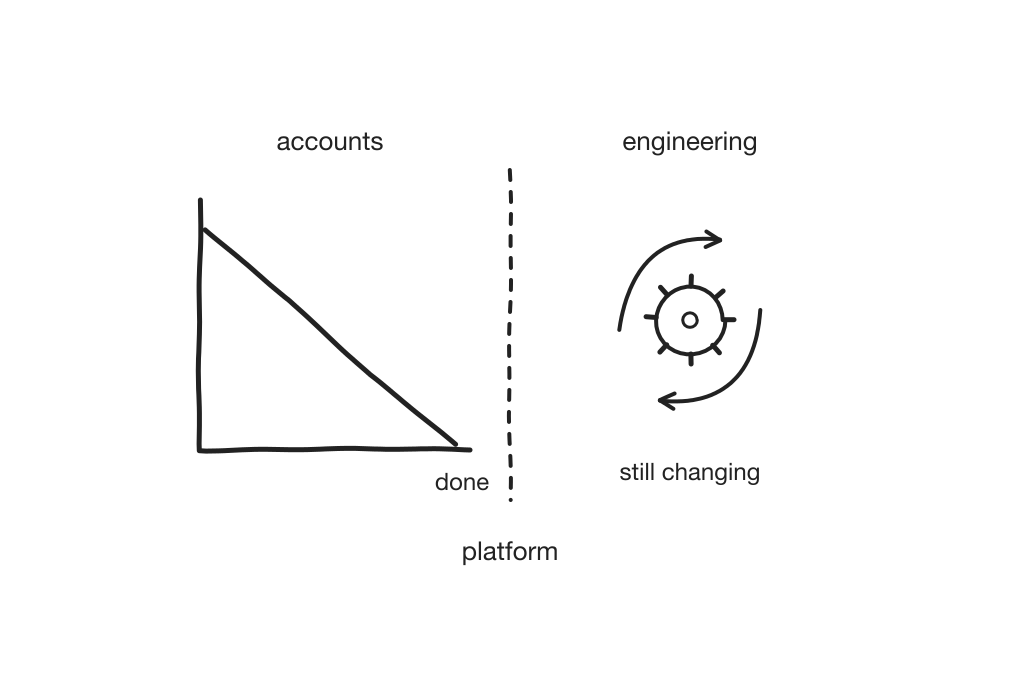
Once software is capitalized and “complete,” the accounts treat it as a depreciating asset, while engineering still has to maintain and extend it.
In This Context
Building a platform as a capital project ends with an asset on the balance sheet, depreciating over a number of years, much like a license or a physical server. To the CFO it has been bought. Leadership impatient with the build may tacitly assume it will need no further investment. But a platform that the business’s future depends on is a living asset: it has to be maintained and improved, or it falls out of date and fails to attract users, which in turn makes further investment look unjustified. On the map, a team is still working on something that the accounts say is finished.
- Capitalization rewards a clear end date.
- Nobody may have explained to finance that the asset is still alive.
- Lack of adoption is read as a reason not to invest, not as a result of not investing.
Therefore
Explain the situation to finance directly; the CFO may have options nobody has asked about, such as treating further investment as operating expense or creating new capital projects for enhancements. For the longer term, fund the platform as a long-lived product rather than a project (Fund Products, Not Projects).
Consequently
- Once finance understands the asset is living, it can help find a way to fund it.
- But left alone, there is no funding to maintain or improve it, so it falls out of date.
- But the catch-22 (not adopted because it’s out of date, not funded because it’s not adopted) is hard to break from inside engineering.
Seen In
Chapter 6, sidebar “War Story: Accounts Say ‘Done’ but Engineers Don’t”