Patterns / 1. Context: Money Smells
Pattern 1.4
Platform as a Cost Center
A platform funded as overhead serves teams that sit in profit centers, so it is judged on its cost while its value is counted elsewhere.
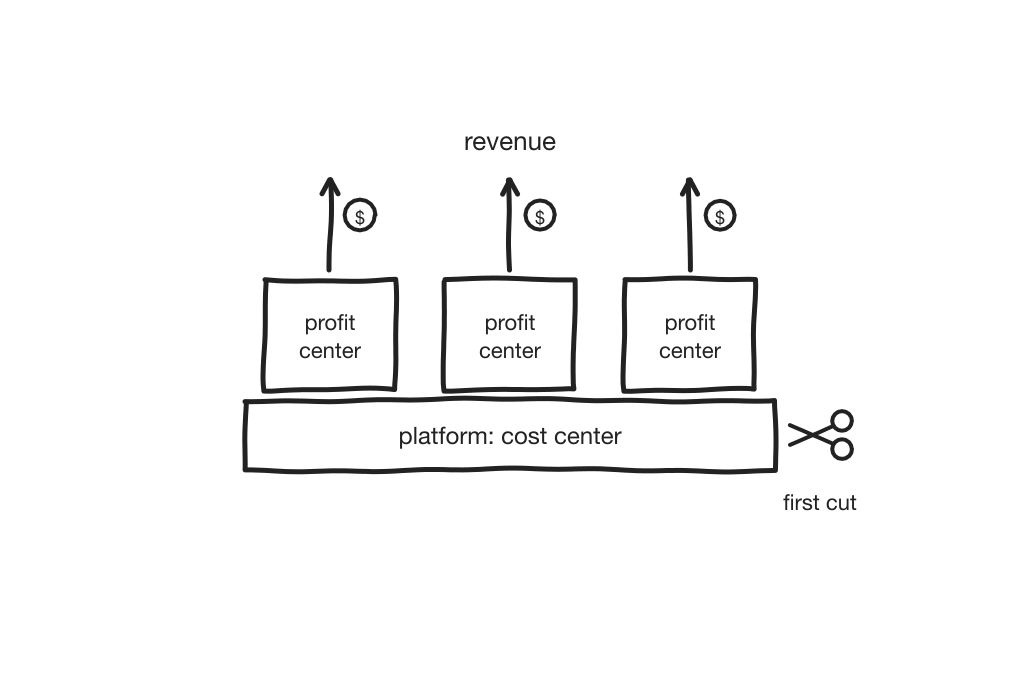
In This Context
Accountants class departments as cost centers or profit centers. Profit centers carry revenue and are judged on margin; cost centers are judged on how well they control cost. A platform team almost always lands in the second group, funded from a central budget that doesn’t match the value the consuming teams get from it. It can’t meet every team’s urgent request at once, and each consuming team’s priorities differ from the platform’s funder’s. When cash gets tight, a cost center is a target for cuts almost by definition, even if the platform exists to reduce the cost of serving every customer.
- Growth in usage brings more demand and complaints, not more budget.
- Managers of the central function may not be rewarded for that growth.
- The language of “investment” is rarely applied to overhead.
Therefore
Recognize that the problem is the funding model, not the platform’s delivery. Fund it so that using it doesn’t add to a single overhead line (Fund the Commons Separately), and in the meantime describe it in terms finance uses, such as an investment that reduces cost of goods sold over time.
Consequently
- The platform can be argued for as an investment, which board members and finance can follow.
- But left alone, it can’t meet demand and is first in line for cuts.
- But some organizations fund central platforms as cost centers and succeed (the book’s Google example), so culture and history can override this pattern.
Seen In
Chapter 2, figure “Multiple teams have urgent work items to fulfill, but the platform team is only funded to deliver one of them”, Chapter 6, “Year Five, Continued: CollabKo”.