Patterns / 1. Context: Money Smells
Pattern 1.10
The Invisible Benefit
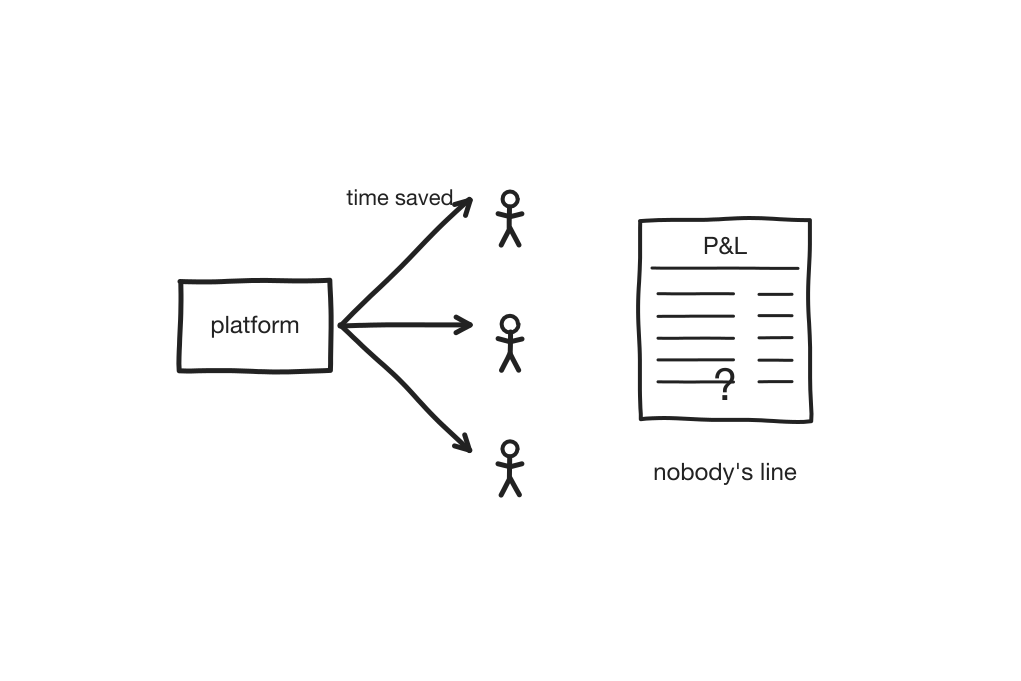
The value of the work lands on nobody’s P&L, so as far as the budget holders are concerned it doesn’t exist.
In This Context
Shared platforms and shared code save other teams time and effort. But a saving that nobody can attribute to a budget, and that nobody can show on a financial statement, is not a saving to anyone who holds one. The engineers whose time is freed are still paid the same salaries and move on to other work. Faster delivery may even raise costs, as the business takes on more. The signal is a case that says “it saves time and money” but can’t say whose money, or show hard numbers.
- Freed-up capacity doesn’t reduce any cost line.
- Higher throughput can look like higher spending.
- Managers of the providing team may not be rewarded for others’ gains.
Therefore
Translate the benefit into a cost line that someone can delete and is measured on reducing (The Deletable Cost Line).
Consequently
- The case becomes something finance can check.
- But left alone, teams have little incentive to share code or platforms, and duplication continues.
- But a case built only on cost lines that can be deleted undersells the work: the freed-up time and faster delivery, which are often most of its value, still show up on nobody’s P&L.
Seen In
Chapter 1, “Invisible Profit and Loss Benefits”.