Patterns / 1. Context: Money Smells
Pattern 1.11
The Annual Budget Lock-In
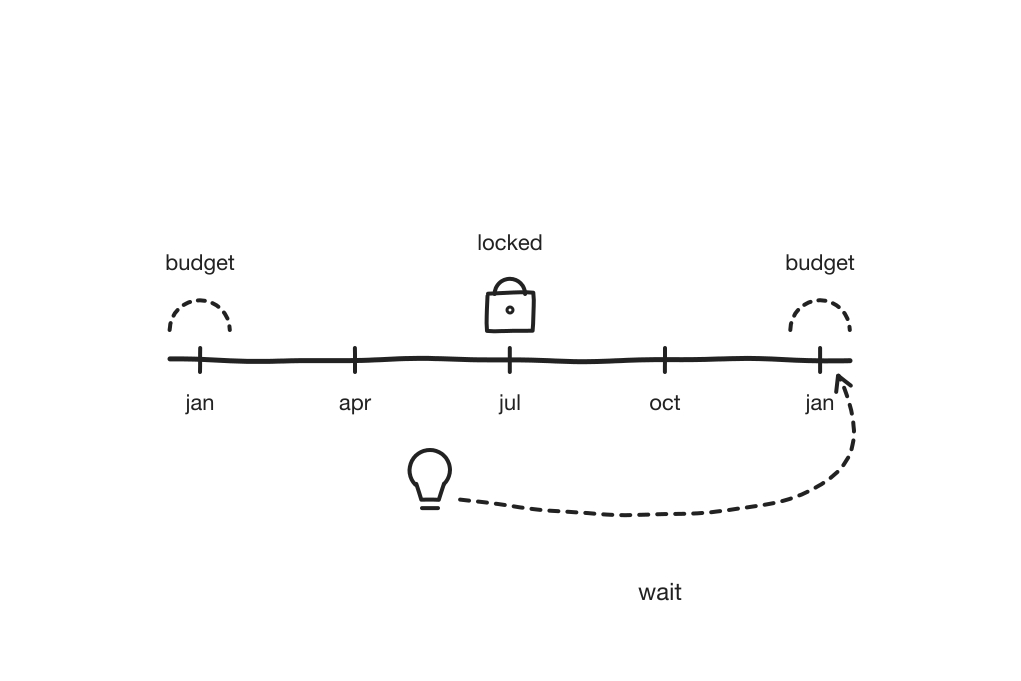
Decisions about money are made once a year, and anything that arrives after the round has to wait for the next one.
In This Context
The yearly budget cycle involves heated wrangling over limited funds across the business units. Once targets and allocations have been agreed, none of the leaders want to revisit them. That pushes teams toward slower but predictable results that hit the targets set at the start of the year, rather than more experimental work. An initiative that pops up mid-year creates more problems for the budget holder than it solves, however good it is. The signal is a budget agreed for the year before the idea arrived, and a budget holder for whom reopening it has only downside.
- Allocations are fought over, so nobody wants to reopen them.
- Targets set in January define success for the year.
Therefore
Time the proposal for the window when budgets are being decided, or find the other events that reopen decisions (Pitch in the Budget Window). Where you can influence the process itself, argue for reallocating money more often than once a year (Rolling Budgets).
Consequently
- A proposal that arrives in the round competes on equal terms.
- But left alone, good ideas wait up to a year, and work favors the predictable over the experimental.
- But working to the cycle means accepting its pace.
Seen In
Chapter 1, “Budget Cycles”.