Pattern 2.5
Overlay the Money
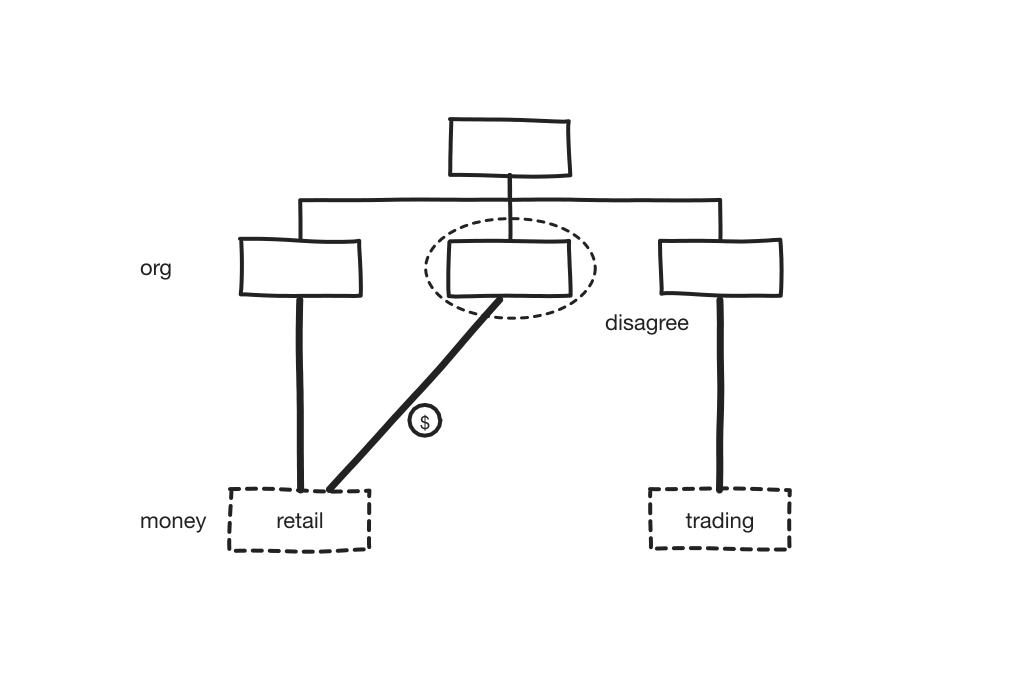
Draw the organization as people experience it, then draw where each team’s money comes from and who really directs its work on top of it, and look for where those layers disagree.
In This Context
The official org chart shows who formally reports to whom. It goes stale, and it records the intentions of whoever ran the last reorganization. It doesn’t show matrix reporting, long-running “acting” roles, or influential people who aren’t on it at all. Most of all, it doesn’t show the money. Change programs are designed against the chart, and then fail because a team’s priorities follow whoever pays for it. When asked where their budget comes from, many people don’t know. Those who do often name a different person from the one their team reports to.
- A team’s reporting line, its funding line, and the person it actually turns to may point to three different people.
- Senior people in the room can steer the drawing back to the official version.
Therefore
In a workshop, have participants draw the organization from memory without bringing diagrams, and merge the drawings. Show the official chart only afterward. Then add three layers:
- Money: where each team’s budget comes from, whether it is a cost center or a profit center, and who holds the budget.
- Patrons: a line from each patron on the patron map to the teams that serve it.
- Influence: who people actually go to when they need something done.
Capture each place where the layers disagree.
Consequently
- Mismatches become specific and nameable, and behavior that looked obstructive starts to make sense.
- The change effort can be redirected to the person who holds the money.
- Some findings are politically awkward, and many will already be known to everyone in the room. The useful question is then why the mismatch has survived, and who benefits from it.
Seen In
Chapter 12, “Throw Away the Map and Make Your Own”, Chapter 12, “A Worked Example: Connector”, Chapter 12, table “Common mismatches between the layers”, and the war story “The Team Marketing Paid For” (Chapter 12, sidebar “War Story: The Team Marketing Paid For”).