Patterns / 1. Context: Money Smells
Pattern 1.14
The Imagined Regulator
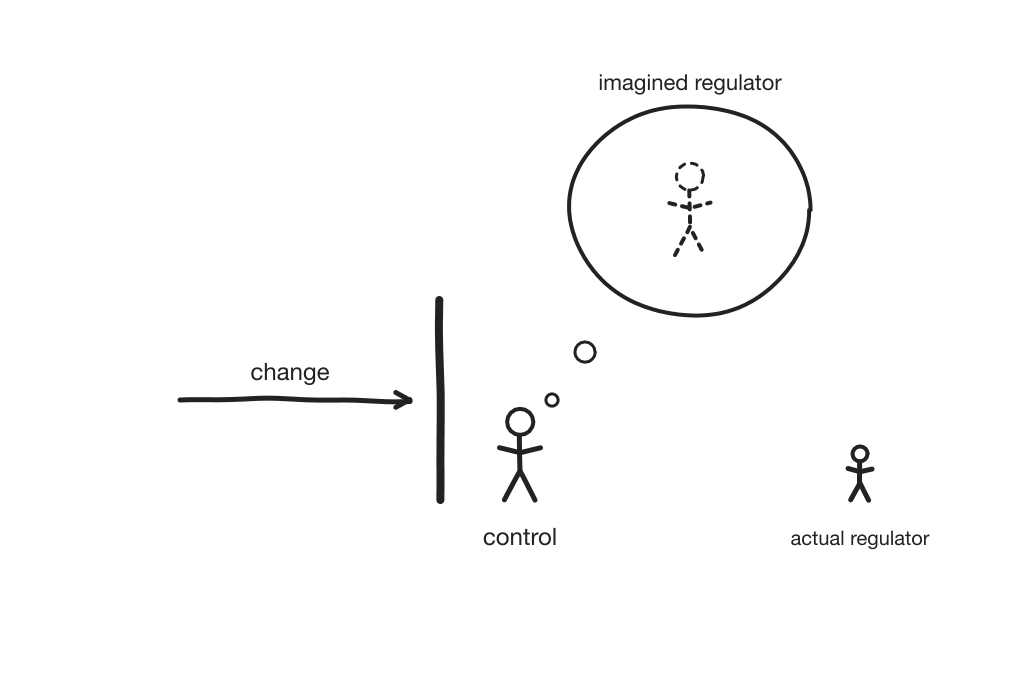
A control function blocks or reshapes change in the name of a requirement that no actual patron has made.
In This Context
In regulated industries the regulator can be the dominant patron, because it holds the license to operate. Auditors, insurers, and certification schemes act in similar ways. But inside the organization, what matters is often the regulator as it is imagined, which can be just as influential as the real one and often more conservative. Questions posed such as: “Will the regulator sign that off?” can change the shape of a design, so the imagined regulator becomes another architect in the room. On the map, a control function on the influence layer blocks change, but nobody can trace its demands to an actual patron’s requirement.
- Caution feels safe, and nobody is blamed for it.
- Regulators may know little about new technology, so assumptions fill the gap.
Therefore
Trace each veto back to a specific requirement from a real patron: which regulator, auditor, or customer asked for it, and what they actually mean. Separate what is explicitly required from what is assumed.
Consequently
- Real requirements stay, and assumed ones can be challenged.
- Teams may be able to shape the regulator’s view, rather than designing around a guess at it.
- But left alone, change is slower and more cautious than any real patron requires.
Seen In
Chapter 11, sidebar “War Story: Designing for the Imagined Regulator”.