Anti-pattern 7.4
Moving the Cost and Calling It a Saving
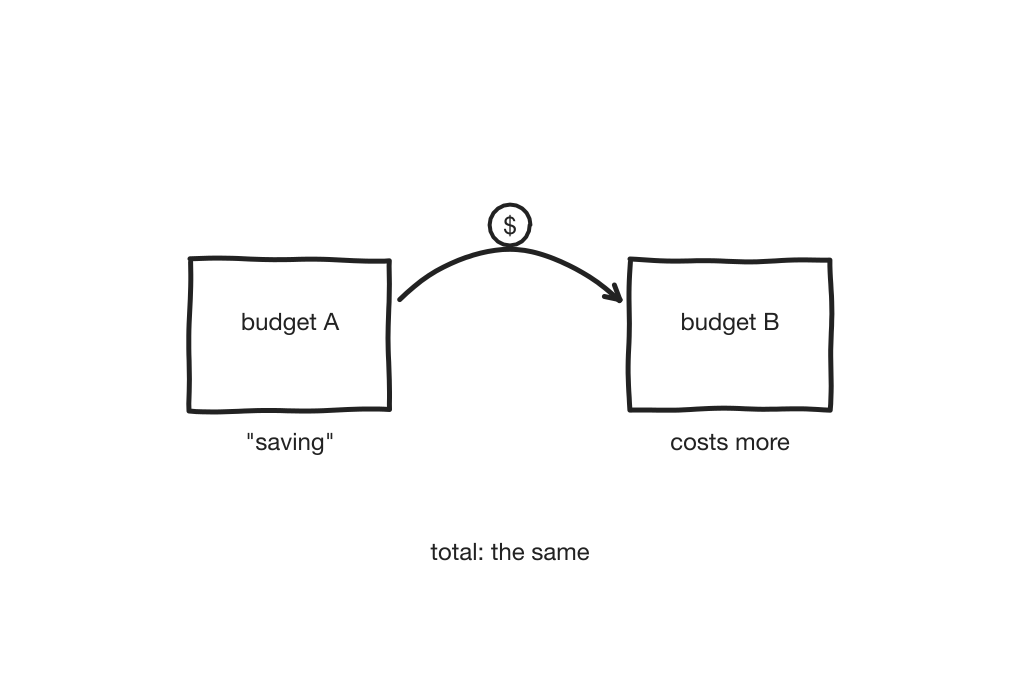
A change that moves cost from one budget line to another is presented as a saving.
In This Context
Finance is checking each cost line for growth, and a proposal needs to show a saving to get through. When a shared platform replaces the units’ own tooling, the tooling lines fall while the platform’s line grows; when a funding model moves the platform’s cost onto the units, one line falls and others rise. Whoever loses a line can easily see a saving.
Therefore
The proposal counts the lines that fall, and presents the result as a saving, without showing the lines that grow.
Consequently
- Finance looks at each line on its own, and sees the cost straight away.
- The budget holder left holding the growing line has to explain it next year, while the benefit sits on somebody else’s budget.
- A saving that can’t be evidenced is treated with skepticism, and so is the next proposal from the same team.
- A better approach: Read the Numbers Behind the Numbers. Keep the saving (such as tooling switched off) separate from any change in who carries a cost, and check that each line still falls once the moved cost is added.
Seen In
Chapter 16, “Make the Numbers Survive Being Checked”; Chapter 17’s opening (Chapter 17, figure “Where Jan’s case puts the saving, and where it leaves the platform’s cost”) and the paragraphs before Chapter 17, table “Jan and Neil’s first estimate: the tooling each business unit switches off, against its share of the platform tax (thousands of dollars a year)” (the unit figures there are marked in Chapter 17 as illustrative, invented by an AI).